Memory
Hold a little.
Recall a little more.
A pattern appears, then disappears. What stays with you? Explore the art of keeping information in mind, one sequence at a time.
Working memoryPattern recall
A DAILY RITUAL FOR YOUR MIND
Short games for memory, focus, and reasoning.
Explore your abilities. Track how you play.
No account needed.
FOLLOW YOUR CURIOSITY
Thinking is a team effort. Explore four connected skills
and find a challenge that catches your attention.
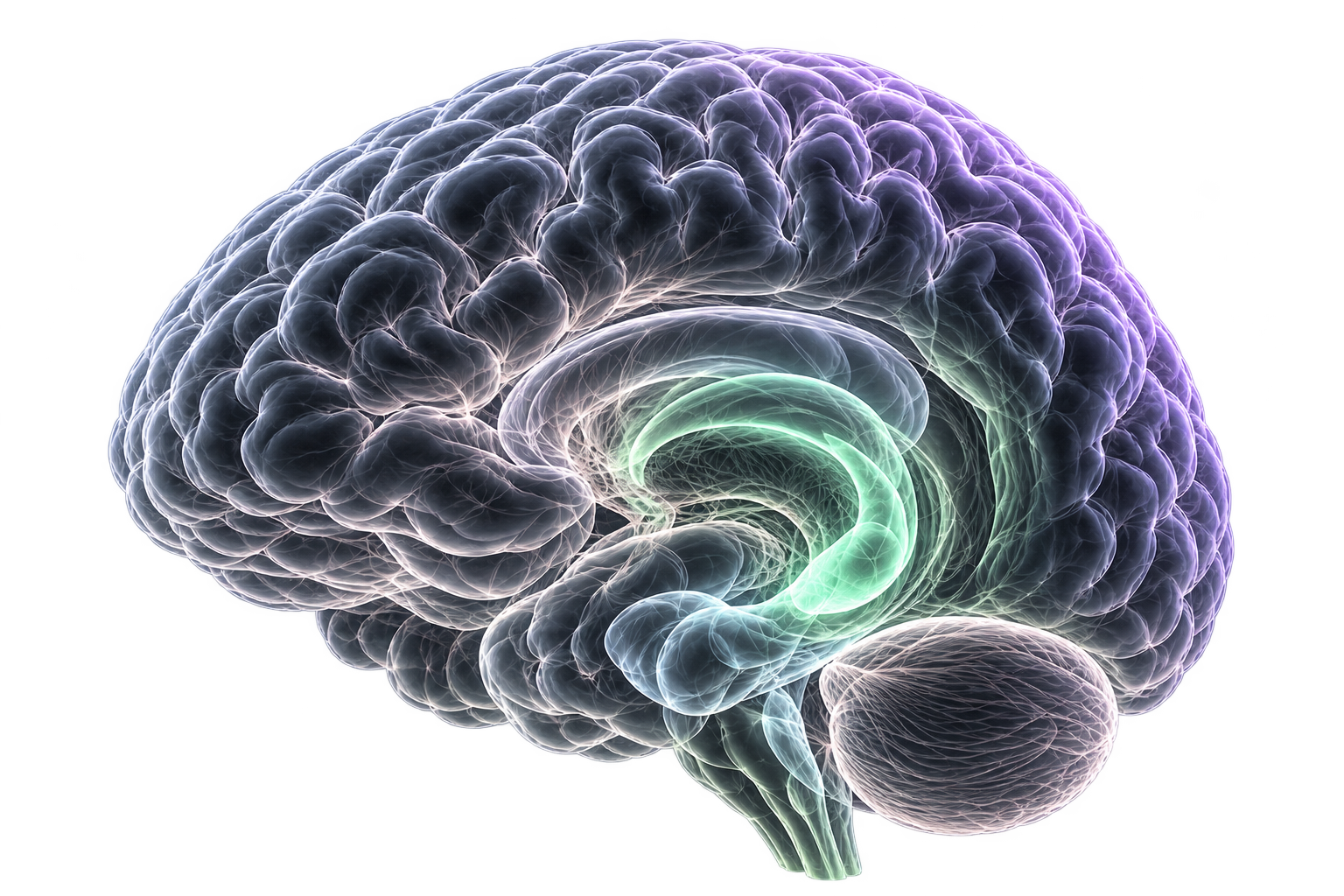
Light pathways are illustrative. Thinking involves connected networks, not isolated regions.
Hold a little.
Recall a little more.
A pattern appears, then disappears. What stays with you? Explore the art of keeping information in mind, one sequence at a time.
Find the signal
in the noise.
Notice what matters. Focus games invite you to spot a target, ignore distractions, and switch attention as the rules change.
A clear choice.
A quicker response.
See a shape. Choose a response. Explore the balance between reacting quickly and getting it right, at your own pace.
Look again.
See it differently.
Turn an idea around. Reasoning and spatial games are about making connections, testing possibilities, and finding a fresh perspective.
A SMALL CHALLENGE. A FRESH PERSPECTIVE.
A LITTLE SPACE IN YOUR DAY
Start with Sequence Recall. No account, no download, just a little curiosity.
Learn with a guided trial, try the timed challenge, or take it slowly in practice.
Get a clear result from your actual game. Save it on this device only if you choose.
PLAY WITH PERSPECTIVE
GameMind is a place to play, explore, and get to know how you approach a challenge. Your results describe the game you just played.
They aren’t a measure of intelligence or a medical assessment. Games can be enjoyable and challenging; broader benefits would require evidence for GameMind itself.
The brain is an illustrative way to navigate. Real thinking involves connected networks working together.
Practical ideas, clear explanations, and room to read between rounds. 12 articles.
Rewritten from the original GameMind archive, with sources and practical examples. Educational reading, not clinical advice or proof of a benefit from GameMind.
Make a prediction, test it, and review one decision. A practical way to get more thoughtful play from strategy games and small puzzles.
A simple pause, a useful review, and one clear aim for the next round can make a gaming session easier to manage.
Understand the idea of flow, choose a manageable challenge, and use clear feedback without turning every session into a performance test.
Compare the two services by their published activities, feedback, account options, and subscription terms, then choose a routine that suits your goals.
Compare a dedicated focus-music service, your own Spotify playlist, and quiet using a simple work-session check.
Check fit, pressure, controls, connection requirements, and return terms before paying for a headset you will wear for hours.
Brain games can be enjoyable practice. Here is how to read the research on aging, understand its limits, and keep game scores in perspective.
Sleep supports attention and memory, but no bedtime trick guarantees sharper thinking. A practical guide to the evidence and habits worth making room for.
What diet studies can tell us about brain health, why individual foods are easily oversold, and how to make everyday meals more varied without chasing a miracle ingredient.
The adult brain can adapt through experience. That fact does not make every brain-training claim true. Learn what practice, brain scans, and game scores can actually show.
Remembering an order, watching for a target, and following a changing rule ask you to do different things. Here is how to choose a GameMind game.
Use a practical checklist for task design, readable feedback, privacy, accessibility, and subscription costs before choosing an app.